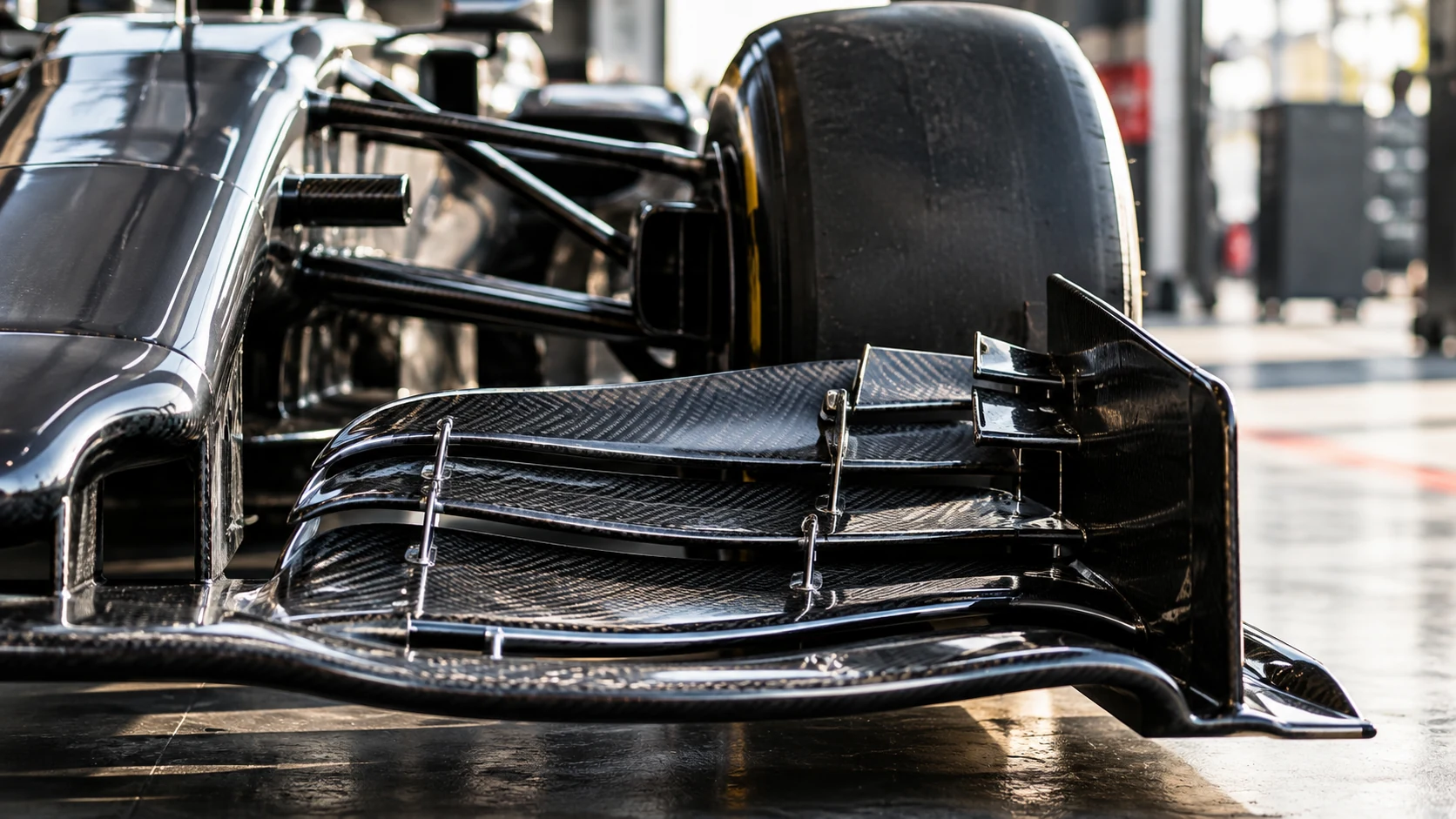
Formula 1 aerodynamics is the art of using air to create useful force. A racing car needs enough downforce to corner and brake hard, but it also needs to limit drag so it can accelerate and reach competitive speeds on straights. Those two goals pull in opposite directions, which is why aerodynamic design is built around compromise.
Downforce is grip created by airflow
When air moves around the bodywork, pressure differences develop above, below and beside the car. Engineers shape those flows so the car is pushed toward the track. More vertical load allows the tyres to generate more cornering force, especially in medium- and high-speed turns.
Downforce is not free. Wings and other surfaces disturb the air, and that resistance becomes drag. A setup that works beautifully at a twisty circuit may sacrifice too much straight-line speed at a venue dominated by long full-throttle sections.
The front wing sets up the whole car
The front wing is the first major aerodynamic surface to meet clean air. It helps generate front-end load, but it also conditions the flow that reaches the wheels, floor and sidepod region. Small changes at the front can therefore influence balance throughout the car.
Drivers often describe a car in terms of confidence at turn-in. If the front axle does not respond consistently, the driver must wait before committing to the corner. Aerodynamic stability matters as much as a peak downforce number.
Why the floor matters so much
The underside of a Formula 1 car can accelerate air through carefully shaped tunnels and channels. When that faster flow is managed well, the pressure underneath the car can be reduced relative to the surrounding air, helping produce downforce with comparatively efficient drag.
The floor also works close to the road, which makes ride height and vehicle attitude important. If the platform moves outside the window for which the airflow was designed, performance can change quickly. That is why suspension, aero and tyre behaviour have to be developed as one system.
Wake control and dirty air
Every car leaves a disturbed wake. Following another car means driving through air that is less clean and less predictable than the air available to the leader. Designers therefore care about how their car behaves not only in isolation, but also when the airflow arriving at the front is already turbulent.
Setup is a circuit-by-circuit compromise
Teams tune wing levels, ride heights and other parameters around the demands of each track. The aim is not to produce the maximum possible downforce everywhere. It is to produce the fastest lap time and the best race performance while keeping the car stable, protecting the tyres and preserving straight-line efficiency.
That balancing act is why aerodynamics remains one of Formula 1’s defining technical challenges: every gain has consequences somewhere else.