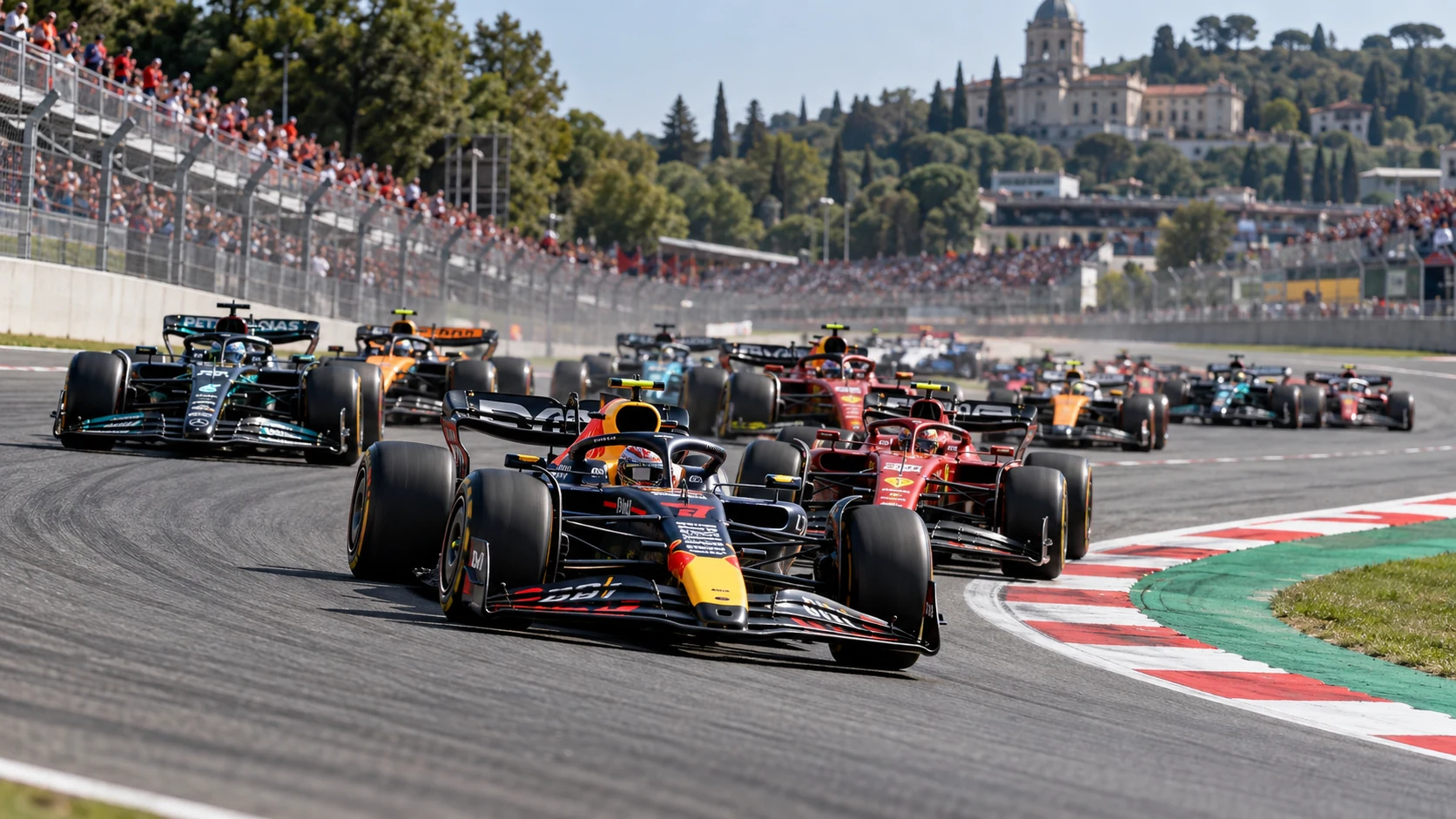
A memorable Formula 1 circuit usually has a strong identity. Drivers should be able to describe where they are by feel: a crest that unloads the car, a sequence that rewards rhythm, a braking zone that invites attack, or a fast corner where commitment matters.
Corner variety creates technical challenge
If every corner has the same speed and radius, setup becomes one-dimensional. A stronger circuit mixes slow traction zones, medium-speed direction changes and faster bends that test aerodynamic stability. That forces teams to compromise instead of optimizing for one type of turn.
Braking zones shape racing
Overtaking is easier when drivers can follow closely enough to reach a braking zone with a meaningful speed difference. Long straights help, but the corner before the straight matters too. If the following car loses too much grip through that preceding corner, the straight alone may not produce a pass.
Elevation adds character
Climbs, drops and crests change the way a car loads its tyres and suspension. Uphill braking can increase confidence, downhill braking can make the rear feel lighter, and blind crests demand commitment before the exit is fully visible. These features make a lap more memorable to both drivers and viewers.
Track limits and runoff affect perception
Modern safety design often requires substantial runoff, but the visual relationship between track edge and consequence still matters. Circuits feel clearer when the intended racing line and the limits of the circuit are easy to understand.
Rhythm is the intangible ingredient
Great circuits link corners in a way that allows one decision to affect the next. A driver who compromises entry may improve the following exit, while a mistake in the first part of a sequence can continue costing time several corners later.
That rhythm is why certain tracks remain compelling across different generations of car. The machinery changes, but the basic challenge of connecting corners efficiently does not.