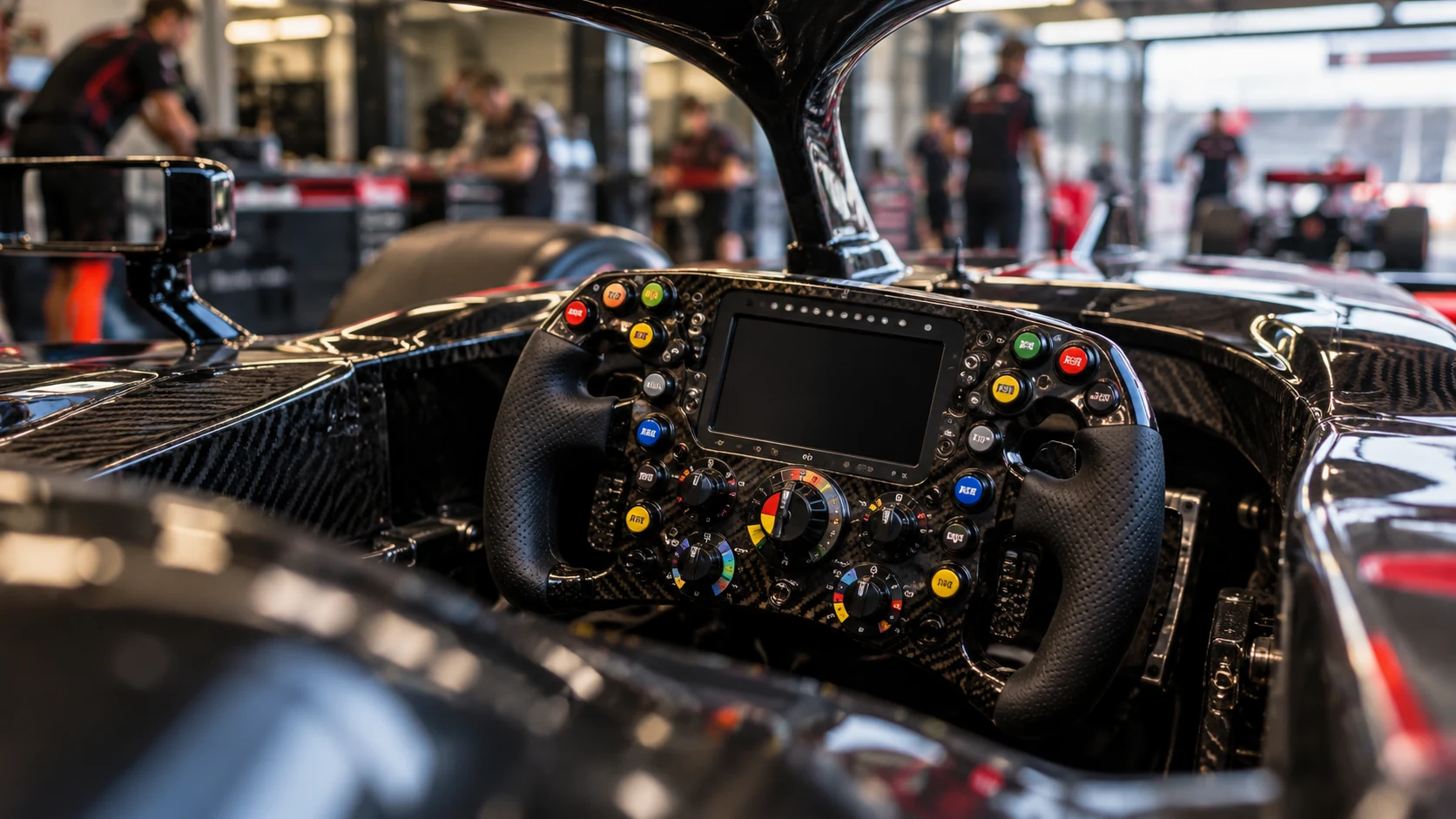
The steering wheel is the driver’s most immediate connection to the car. It must provide precise steering feedback while also placing a large number of controls within reach. The result is a compact interface designed for operation while the car is moving at racing speed.
Why there are so many controls
A Formula 1 car has systems that may need adjustment during a stint. Rotary switches, buttons and paddles allow the driver to change settings without removing a hand for long. The exact layout differs by team, but the principle is the same: frequently used controls must be easy to identify by touch.
Displays reduce radio traffic
A central screen can present lap information, warnings, system status and other data. Engineers still communicate over the radio, but the display gives the driver an immediate view of selected information without waiting for a spoken message.
Paddles keep key actions close
Shift paddles are positioned behind the wheel so the driver can change gears while maintaining grip on the rim. Additional paddles can be assigned to clutch or other functions depending on the design. Ergonomics matter because the driver repeats these actions hundreds of times.
Feedback is as important as electronics
Despite the visible complexity, the wheel still has to communicate what the front tyres are doing. Drivers feel changes in load, grip and vibration through the steering system. A wheel that is uncomfortable or obscures subtle feedback can make a fast car harder to exploit.
Every layout is personalized
Teams can tailor grip shapes, button positions and control logic around driver preferences. The goal is to make the wheel intuitive enough that the driver can operate it under braking, in traffic and while managing the rest of the car.
That combination of tactile feedback and dense functionality makes the steering wheel one of the clearest examples of how Formula 1 blends human skill with engineering.