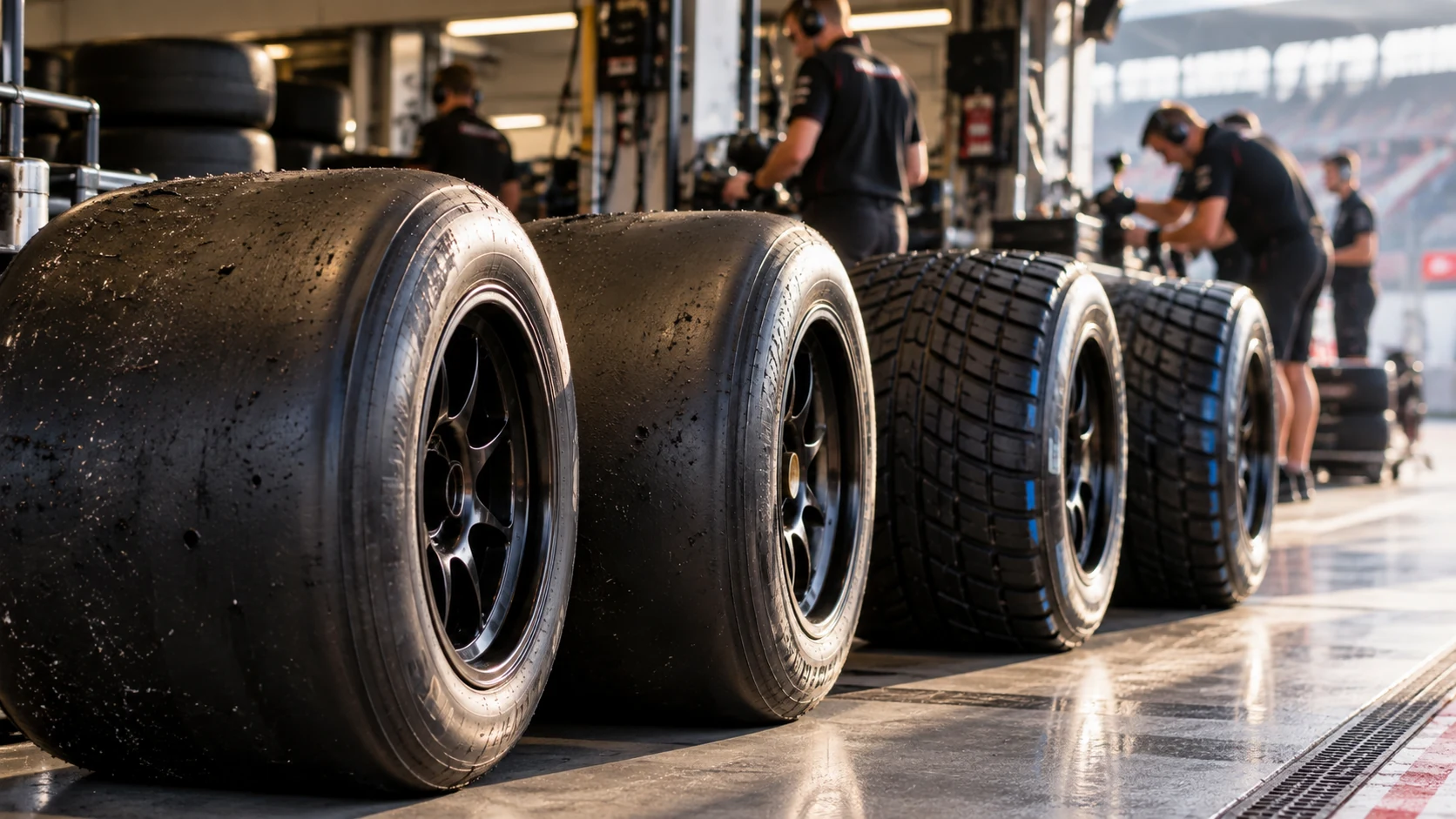
Tyres are the final link between a Formula 1 car and the circuit. Aerodynamics, suspension, power delivery and driver technique all matter, but every acceleration, braking and cornering force must ultimately pass through four small contact patches.
Grip depends on temperature and load
Racing tyres work best inside a useful temperature range. If they are too cold, the rubber may not deform and bond with the surface as effectively. If they become too hot, grip can fall and wear can accelerate. Drivers therefore spend an entire race managing energy into the tyre.
That energy comes from braking, steering, acceleration and the repeated deformation of the tyre carcass. Track temperature and the roughness of the asphalt also influence how quickly the tyres reach their working window.
Degradation is not the same as simple wear
A tyre can lose performance even before the tread is physically exhausted. Heat cycles, surface damage and structural stress can reduce grip. In race strategy, the important question is how rapidly lap time is falling away and whether a fresh set would recover enough pace to justify a pit stop.
Why different compounds exist
Softer rubber generally offers more grip but may have a shorter useful life, while harder rubber typically trades some peak performance for durability. The exact balance depends on the circuit, weather, car and driving style. Choosing the right compound is therefore a strategic decision rather than a simple ranking of “fast” and “slow.”
Wet-weather tyres solve a different problem
When standing water appears, the challenge becomes clearing water from the contact patch. Grooved wet-weather tyres are designed to move water away so the rubber can maintain contact with the track. As a circuit dries, those grooves can become a disadvantage because the tyre moves and overheats more than a slick.
Strategy is about timing
A pit stop costs time, but fresh tyres can give it back through faster laps. Teams compare the likely pace of the current set with the expected pace after a stop, then add traffic, track position, weather and safety-car risk. The best strategy is often the one that places the car on the right tyre at the right moment, not simply the one with the fewest stops.
That is why tyre management remains one of the easiest ways for fans to understand the tactical side of Formula 1: the tyre tells the story of how hard the car is being pushed and what choices may come next.